
CONTENT
Network devises
At 4 HandyCom we use different network devises for infrastructure, which we catalogue by devise, brand and model:
|
Devises |
Brand |
Model |
|
Router |
Mikrotik |
|
|
Switch (Capa 2 y 3) |
Extreme |
|
|
Switch Core |
Extreme |
|
|
IP Phone |
|
Grandstream
Cisco
Polycom
Yealink
|
|
Access Point |
|
Extreme
|
Differences
Each devise previously mentioned has a specific function that characterizes and differentiates each other, the following table will list their main characteristics.
|
Equipos |
Functionality |
OSI Model Layer |
|
Router |
|
Layer 3 |
|
Switch |
|
Layer 2 |
|
Switch Core |
|
Layer 2 y 3 |
|
IP Phone |
|
Layer 2 |
|
Access Point |
|
Layer 2 |
Uses
Within the implementation these teams can help us solve and / or adapt the requests that customers require, as an example shown in Figure 1.0, where the example of the implementation and use of network equipment is given.
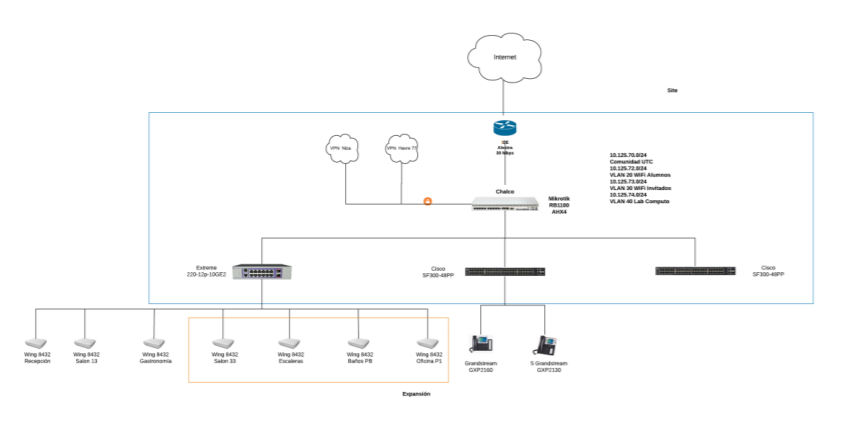
Figure 1.0 Network topology
As shown in the previous topology, each Network Equipment has a specific use. The main uses of each devise are listed below.
Router:
- It's main use IP adress routing
- Interconnection of internet links
- Network monitoring
- Policy creation
- NAT
- DHCP server
- VPNs
Switch:
- LAN equipment connection
- Provide equipment with power through PoE technology
- Packet flow control
- DHCP server
- VLANs
Switch Core:
- VRF creations
- Dynamic and static routing
- VLANs
- Packet flow control
- Connection between LAN and WAN equipment
IP Phone:
- VoIP telephony
Access Point:
- ACL management
- WI-FI delivery using the ac/ b/g/n standards
- 2.4 GHz and 5GHz band handling
- SSIDs
Comments
0 comments
Please sign in to leave a comment.